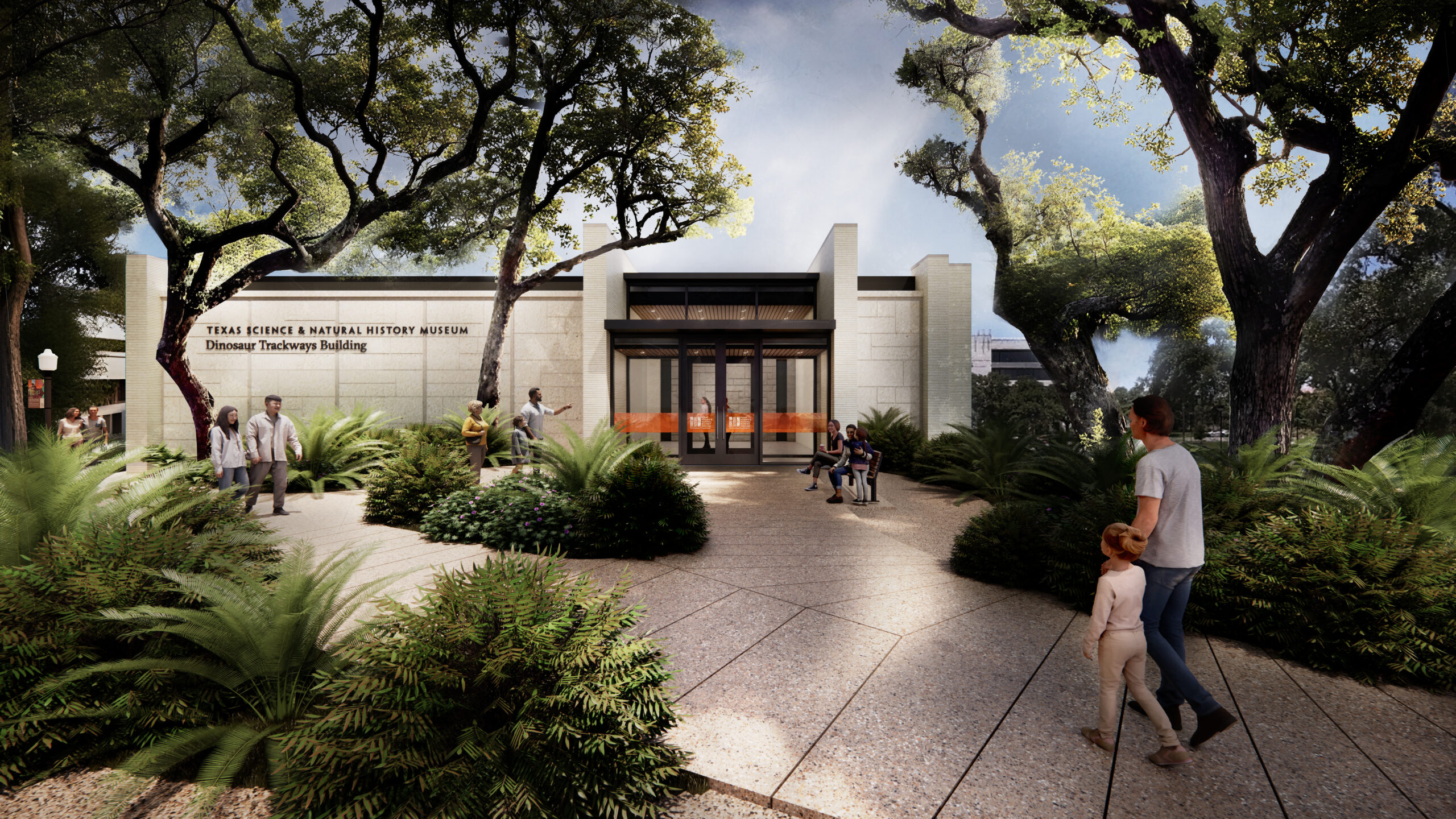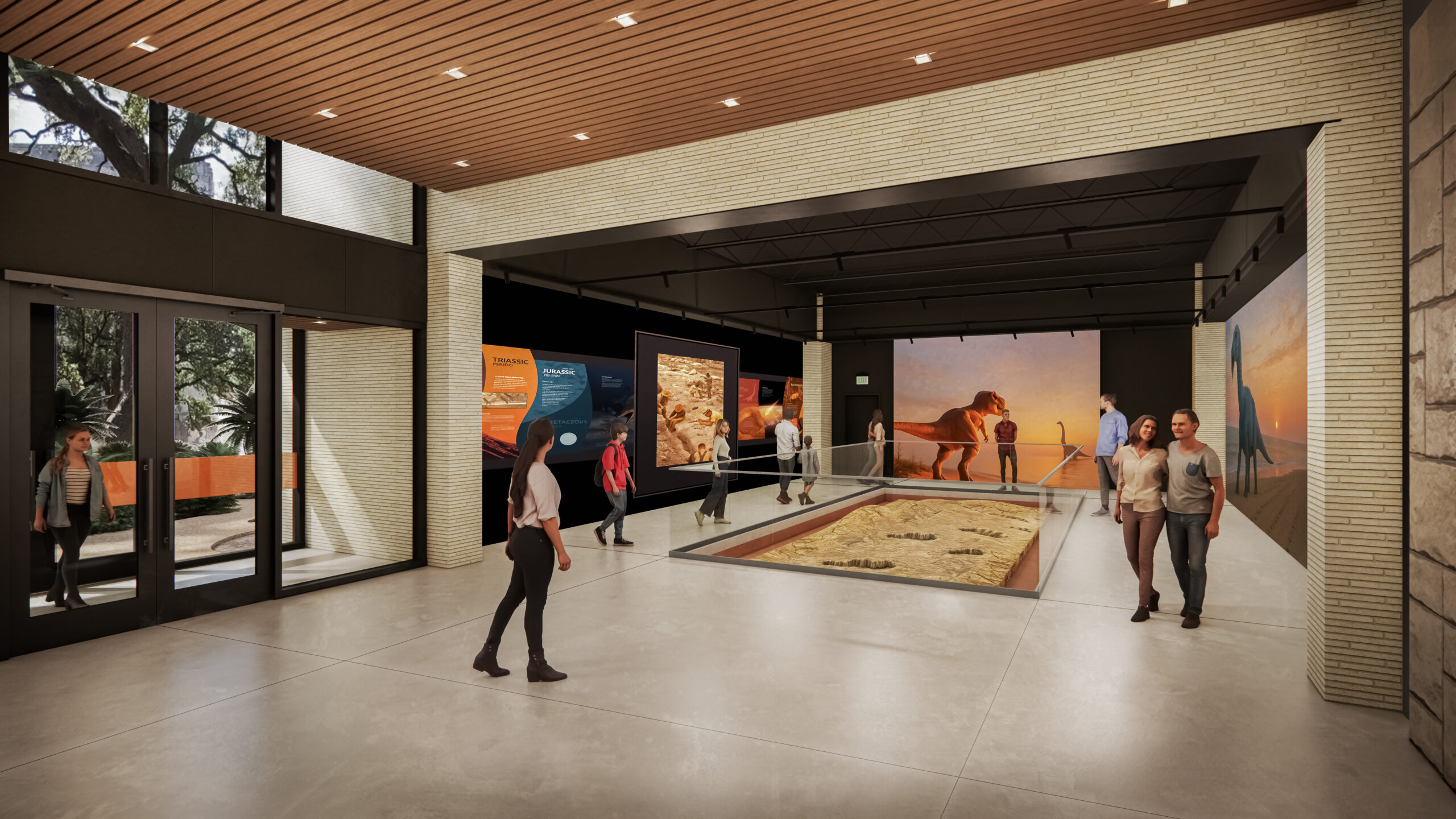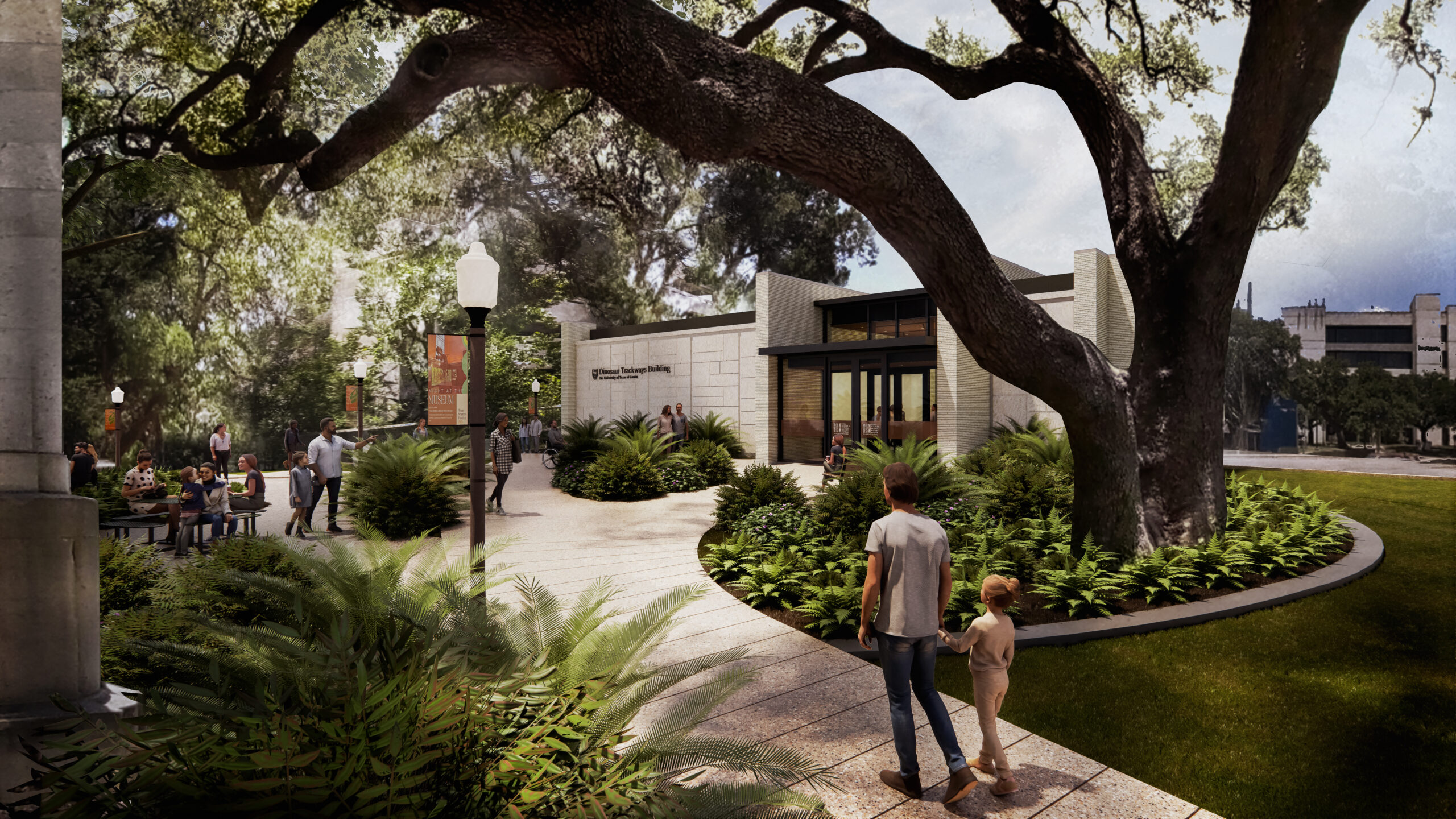
Nestled between historic live oak trees on the east side of campus, the new Dinosaur Trackways Building at the Texas Science and Natural History Museum at The University of Texas at Austin will display a twenty-six-foot-long section of fossilized dinosaur footprints. The limestone slab, extracted from the Paluxy River in 1940, features a complete sequence of sauropod and theropod tracks formed 113 million years ago. This fossil is a designated reference specimen for paleontologists around the world, making it a prized artifact in the collections of the Texas Science and Natural History Museum. The new building conserves the trackway while allowing visitors to walk alongside the specimen and experience prehistoric life in Texas.
The building’s form is inspired by a sketch done by the paleontologist responsible for identifying and removing the tracks from their original site. The sketch depicts a dinosaur’s foot pressing into the riverbank and the mud ‘welting’ up around the perimeter—the act that left behind this index of prehistoric life and activity. Echoing this action, the design recesses the trackway below the floor, with the building appearing to push up out of the ground around it. Heavy stone walls emerge from the earth at the corners and entrance, defining the boundaries within which the artifacts, exhibits, and visitors interact.
- Preserving Prehistoric Texas, Texas Science & Natural History Museum, April 2026
- 'Dinosaur track building to be built at Texas Science & Natural History Museum', KVUE news, ABC Network, April 2026